5 things to check before ordering an online booking system
Online booking helps only when clients, the phone and the team all book into the same calendar. Five short checks show when a ready-made app is enough and when a custom system pays off, for a clinic, a salon, a car service, a training centre or another business that works by appointment.
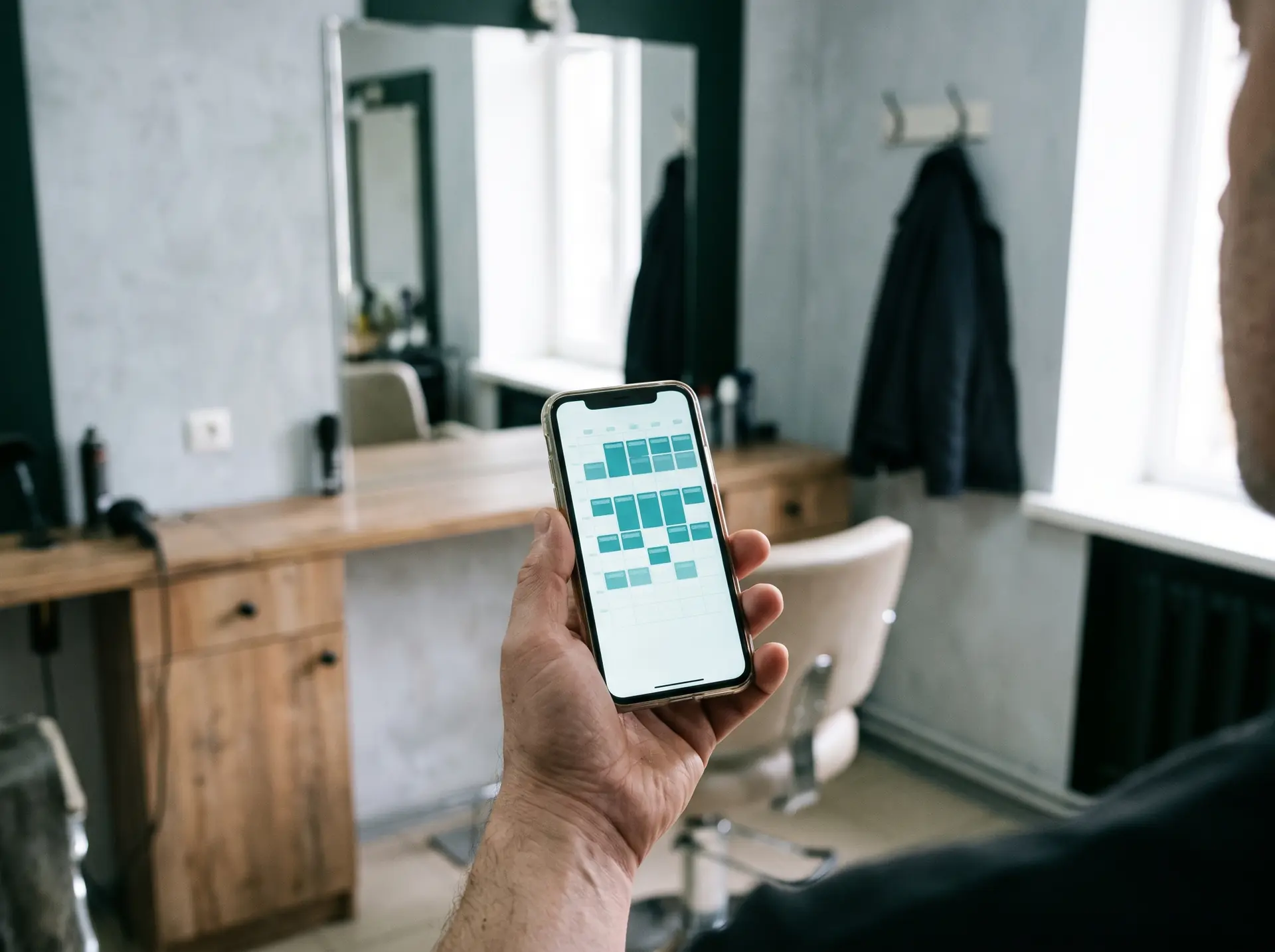
Is a ready-made app enough, or does a custom system pay off?
A single specialist with a simple schedule usually does fine with a ready-made app, even a free one. A custom system makes sense with several specialists working across rooms, bays or branches, clients from abroad booking in their own language, links to programs already in use, or a fee per user that keeps adding up. A small first stage keeps the budget from being tied up in a long build.
How to check it in five minutes
- Count the specialists, the places they work in (chairs, rooms, service bays, halls) and the branches, and note which services need a specific person or device.
- Add up a year of the ready-made app’s fee per user and per branch, together with paid add-ons such as reminders or extra languages.
- The written quote should give a fixed price and a deadline for the first stage, for example online booking with reminders. Payment comes after delivery, and the work can stop after any stage.
What to ask the developer
- Which of our rules does a ready-made app fail to cover, and which of them would a custom system handle?
- What goes into the first stage at a fixed price, and what stays for later stages?
Online, message and phone bookings land in one calendar
A common gap is a booking page that cannot see the phone. A client takes a time online, the administrator gives the same time to a caller, and two people turn up together. The calendar has to gather every channel and know the person, the place, the device, the length of each service and the break between clients. That is why we start from the bookings of an ordinary week, with all their channels.
How to check it in five minutes
- List where bookings arrive today: the website, the Google profile, Instagram, messages and the phone, and who enters each of them.
- Write down the length of each service, the break between clients and the services that need a given room, chair, bay or device.
- In the demo, book the same time once as a client on a phone and once as the administrator taking a call. The second attempt should be refused.
What to ask the developer
- What happens when two people choose the same time at the same moment, one online and one by phone?
- How does the calendar account for service length, breaks, rooms and devices, not only for the specialist?
Confirmations and reminders let clients reschedule on their own
A client who forgets an appointment leaves a slot no one else can use. A reminder in the client’s language, on a channel they already read, with a link to confirm, reschedule or cancel, gives that slot back to the calendar. The system counts cancellations and missed appointments, so the effect shows in the business’s own figures, with no number promised in advance.
How to check it in five minutes
- Choose the channels clients actually read: SMS, e-mail, Viber, Telegram, WhatsApp or another the business already uses, and the languages the messages go out in.
- Check that an appointment can be confirmed, rescheduled or cancelled straight from the message, and that the freed slot returns to the calendar for the next client.
- Before work starts, ask for a written estimate of the monthly cost of messages, and check that the system has a report that shows cancellations and missed appointments.
What to ask the developer
- What will the messages cost per month at our number of bookings, and on which channels?
- Where do we see cancelled and missed appointments, and the source of each booking?
The system links to the programs already in use and replaces none of them
A booking system does not have to replace what already works. At a clinic, the medical record stays in the medical software. Invoices stay in the accounting program. The system links to them so nothing is typed twice. The phone and the administrator stay too: they simply work in the same calendar.
How to check it in five minutes
- List the programs in use today: the website, the accounting program, a medical or workshop program, and the spreadsheets where bookings and clients are kept.
- For each program, write down which data should pass to the booking system and back, and who enters it today.
- Check that clients and future bookings move over from Excel or the old program before launch, so the first week does not start with an empty calendar.
What to ask the developer
- Which data passes between the booking system and our programs, in which direction, and who enters it?
- How do our current clients and future bookings move into the new system before launch?
Client data is protected, and the code stays with the business
Names, phone numbers and appointment history belong to the clients, and the business answers for them as the data controller. At a clinic, health data calls for even more care. So the business chooses where the data is kept, signs the data processing agreement before anyone gets access, and the contract transfers to it the economic rights to the code written for the project.
How to check it in five minutes
- Sign the data processing agreement (Law 195/2024) before any access, and check that the data sits on the server the business chooses.
- Check that the booking page asks for consent to messages, and that all clients and appointments can be exported at any time.
- Check that the contract transfers the economic rights to the code written for the project, with no fee per user.
What to ask the developer
- What do we sign before you get access to our client data, and where is the data kept?
- How do we export all clients and appointments, and does the contract transfer the economic rights to the code written for the project?
The short list
- The choice between a ready-made app and a custom system rests on the number of specialists and places and on the yearly fees, with a fixed-price first stage.
- Bookings from the website, messages and the phone land in one calendar that knows services, rooms and devices.
- Reminders go out on the client’s channel with a link to reschedule or cancel, and their monthly cost is estimated in writing.
- The links to the programs in use are written down, and current clients move over before launch.
- The data processing agreement, the data export and the code rights are settled before work starts.
Questions to ask the developer
The questions show up here after a no or a not sure.
All five points are covered.
- Which of our rules does a ready-made app fail to cover, and which of them would a custom system handle?
- What goes into the first stage at a fixed price, and what stays for later stages?
- What happens when two people choose the same time at the same moment, one online and one by phone?
- How does the calendar account for service length, breaks, rooms and devices, not only for the specialist?
- What will the messages cost per month at our number of bookings, and on which channels?
- Where do we see cancelled and missed appointments, and the source of each booking?
- Which data passes between the booking system and our programs, in which direction, and who enters it?
- How do our current clients and future bookings move into the new system before launch?
- What do we sign before you get access to our client data, and where is the data kept?
- How do we export all clients and appointments, and does the contract transfer the economic rights to the code written for the project?

Online booking is worth it only if the client and the team see the same calendar.
That is how we build booking systems: we begin with online booking and reminders, link the system to the programs already in use, deliver in stages paid after handover and put the code and all access in the business’s name from day one. See what an online booking system includes
A written quote within 3 working days
A few lines about the company and what the site or program should do are enough. We reply with the right questions, then with a written quote.